
70 West Plumbing · Homeowner guide
No Hot Water in the House? Start With These Observations
Separate a whole-home outage from one cold fixture or a supply that runs out.
No hot water anywhere in the house usually points to the water heater. A shower that turns cool after ten minutes, or one tap that never gets hot, is a different problem. Tell us which one you have when you call so we know where to look.
First distinction
All fixtures, one fixture, or hot water that fades?
Try to recall what happened at more than one ordinary hot-water tap. If the kitchen and bathroom both stay cold, report a whole-home problem. If one sink or shower is cold while another gets hot, the fixture or nearby plumbing may need attention as well as the heater. If water starts hot and then cools during use, see our water heater service team, but describe it as short hot-water duration rather than complete loss.
You need not run every tap repeatedly or create a new hazard to test it. A few normal-use observations are enough. Note when the change first appeared and whether it followed unusually heavy hot-water use, a service visit or a power interruption, if you already know.
At the heater
Use visible information without opening the unit
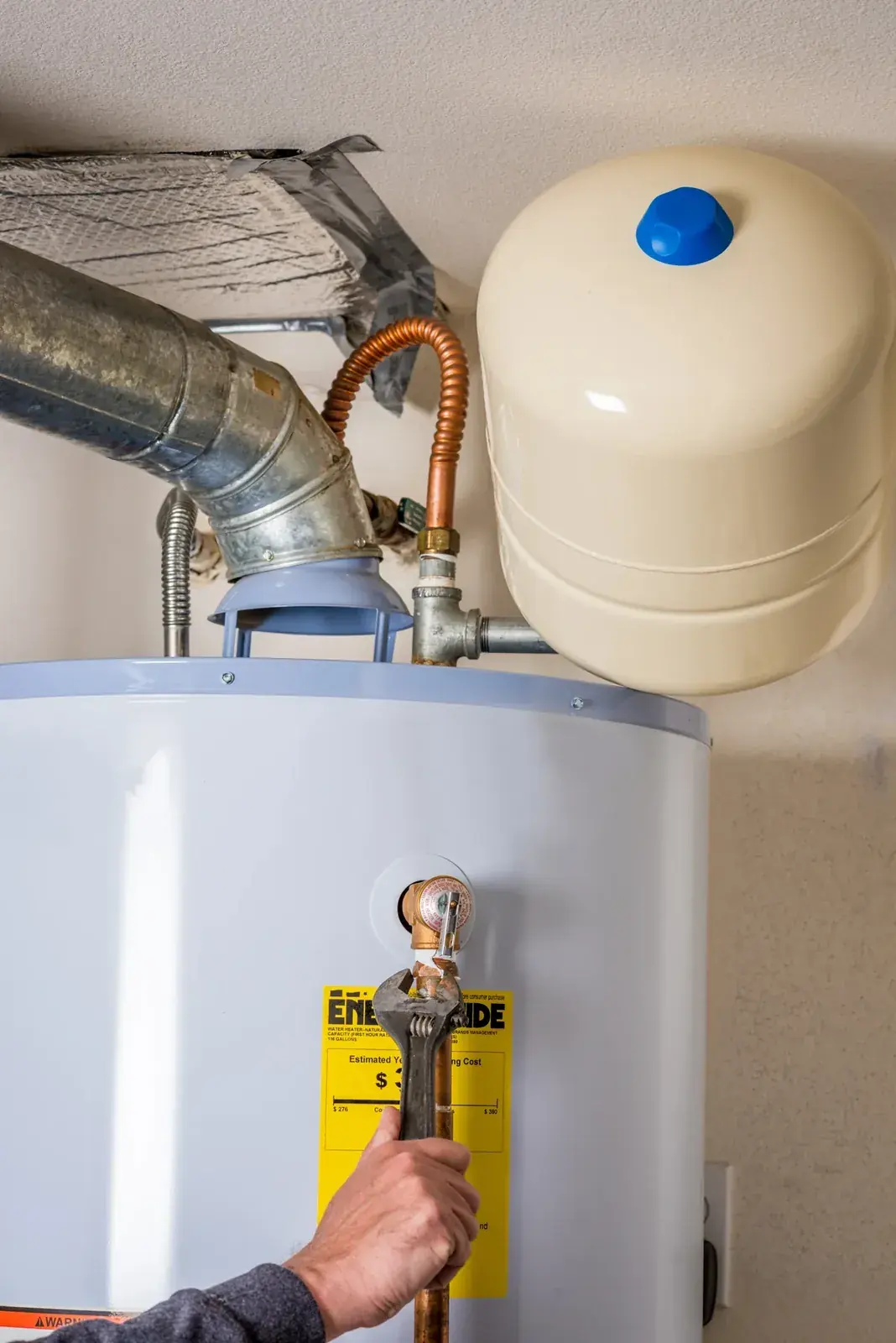
From a safe, accessible position, note whether the heater is a storage tank or tankless unit and whether it is gas or electric, if that is already clear. A label may show the brand and model. Some units have a visible display or error message; write down its exact text or photograph it without removing a cover.
Look for water around the unit. If there is an active leak, mention it first rather than treating the call as only a heating complaint. Do not open an electrical panel, manipulate a burner or pilot, or repeatedly reset a safety control based on generic online instructions. Different models have different safe service procedures.
What service checks
Several different faults can stop hot-water production
A storage heater may stop heating because of a control, heating element or burner-related issue; a tankless unit may show a model-specific fault. Household water supply and fixture problems can also change what reaches the tap. These are categories for a professional to check, not a home diagnosis from the symptom alone.
Bradford White directs owners reporting no hot water or error codes to a plumbing professional. Portland Water Bureau likewise notes that a water heater with no hot water may need service or replacement. The actual recommendation depends on inspection and the unit’s condition. Loss of hot water by itself does not prove a new heater is required.
Useful details
Give a clear report and ask what was found
Tell 70 West when the hot water stopped, which fixtures you noticed, whether any water is still warm, and whether there is a leak, unusual sound or visible error. Share the type, brand and model only if accessible. A description such as “both bathroom and kitchen hot taps have been cold since this morning” is more useful than guessing that a thermostat failed.
After assessment, ask what caused the loss and whether the proposed repair addresses that cause. If replacement is considered, our tank-or-tankless guide can help frame the separate sizing and installation conversation.
Need a plumber?
Water heater questions? Give us a call.
70 West Plumbing serves Hot Springs, Glenwood, Bismarck and Bonnerdale. Call 501-547-0518, 6AM to 6PM daily.