
70 West Plumbing · Homeowner guide
Find Your Home’s Water Shutoff Before You Need It
Learn where your water supply enters the home and which valve controls it.
If you know where to shut off the water, you won’t be hunting for it during a leak. The small valves below a sink serve that fixture; the home’s main water shutoff controls a broader supply. Find the right valve now, while things are calm, and get help if the plumbing layout is new to you.
Which valve?
A nearby valve may serve only one fixture
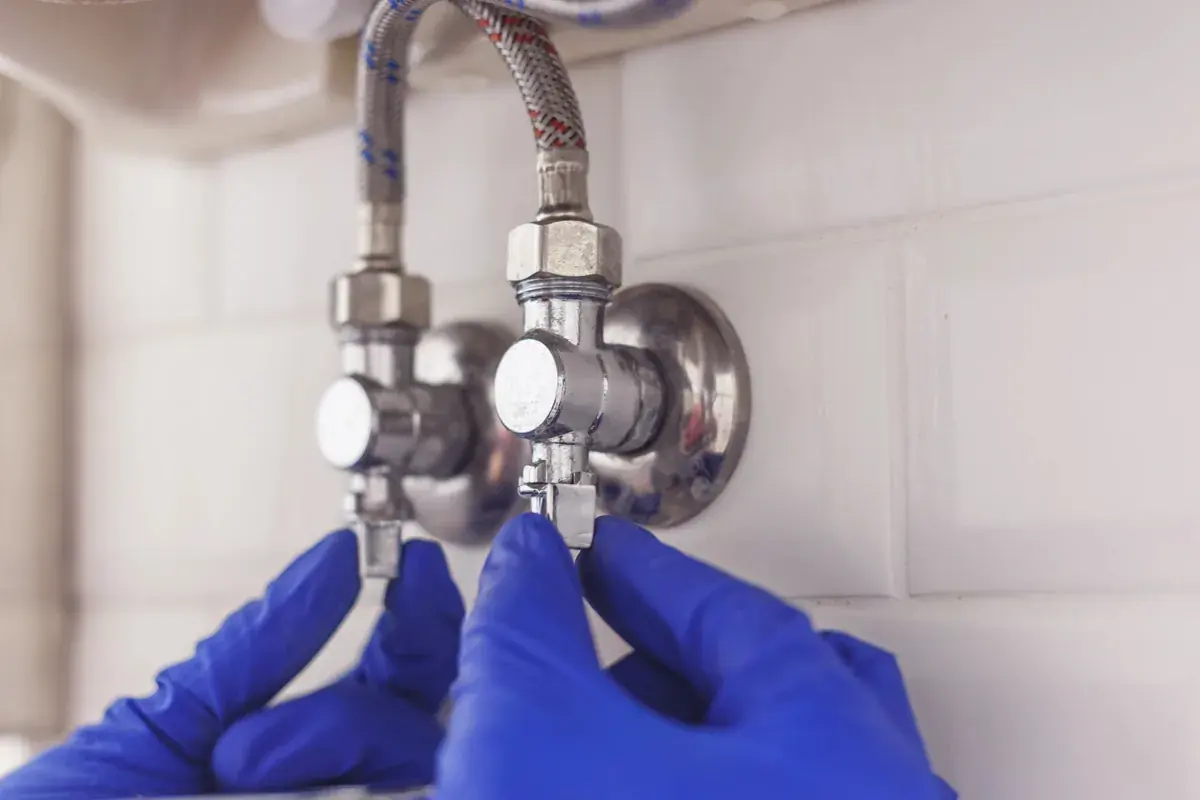
Under-sink valves usually control the sink’s hot and cold supplies. A toilet often has a separate supply valve nearby. Those are handy for a problem at that one fixture, but closing one doesn’t shut off the water to the whole house.
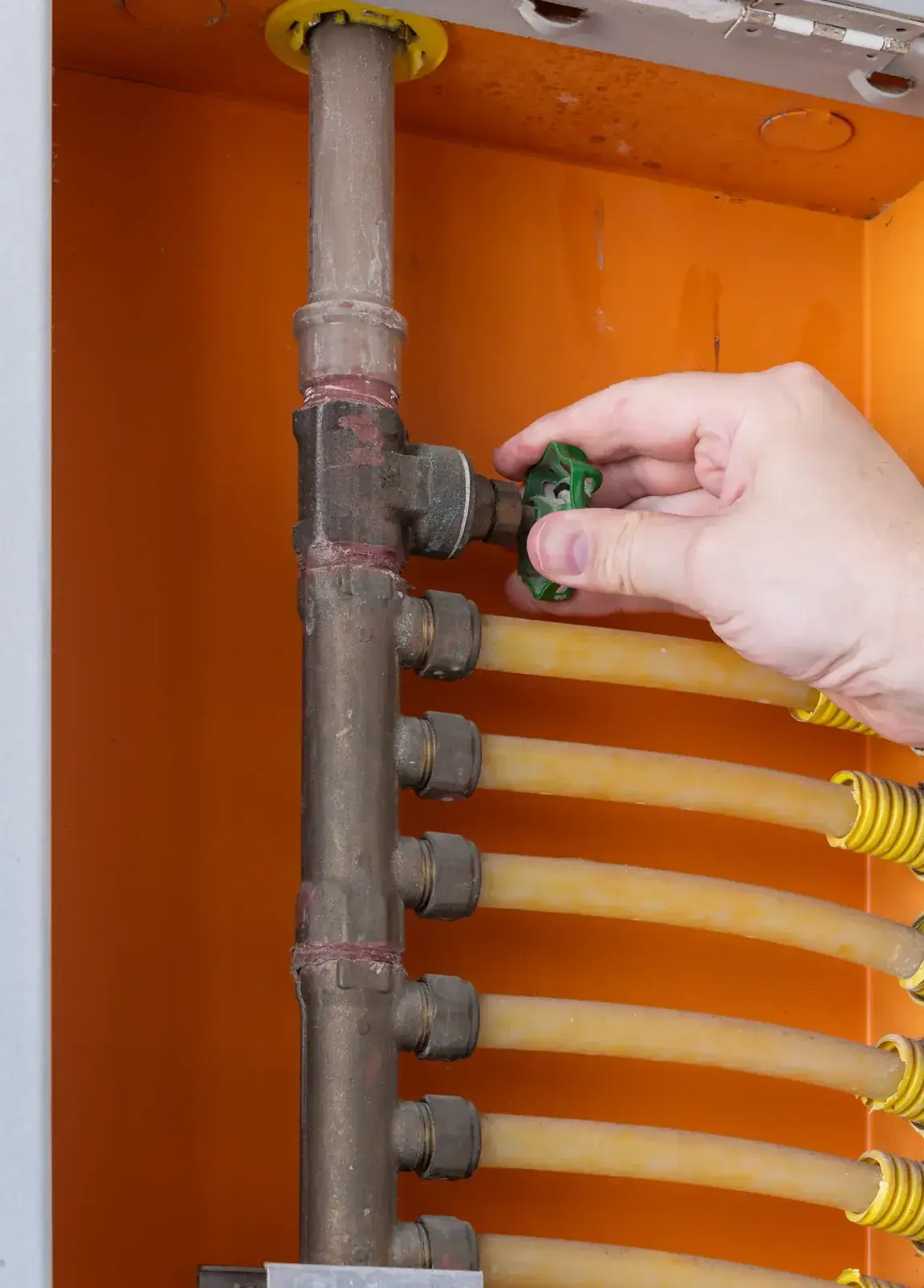
A valve beside a water heater may serve the heater rather than the whole home. You can’t tell what a valve controls from its color, handle shape or where it sits. Have someone trace the supply line before you count on a label or a guess in an emergency.
Where to look
Start where the water supply enters the building
Common places to look include a utility area, basement, garage or an accessible point near the foundation. Layouts differ. Your home inspection report, installation records or a labeled photo from the previous owner can give you a head start.
Look only in areas you can reach safely. Do not enter a flooded crawl space, disturb electrical equipment or dig around an unknown line. If you rent or share a building, ask the property manager which control serves your unit and who is authorized to operate shared equipment. If you can’t find the valve, a plumber can help you track it down.
Know how it works
Learn how that particular valve works
Wheel handles and lever handles operate differently. The best prep is to confirm what your valve controls, how it normally sits and how it works with someone who knows your system. If it’s stiff, corroded, leaking or hard to reach, have it checked instead of forcing it.
Ask how to tell the right water is off and what to do before turning it back on. Homes with wells, shared services or unusual layouts need a plan matched to their equipment. A generic diagram can’t cover every house.
Water-provider controls
Keep the street-side control separate
The valve for your home and the water provider’s equipment aren’t necessarily the same thing. The Regional Water Providers Consortium notes that rules for customer operation at the street differ between providers. Ask your own provider what it allows and how to request an emergency shutoff.
Keep the provider’s contact information with the household plan. If you can’t stop the water at a known valve you can safely reach, say so when you call for help. Avoid using a wrench on an unfamiliar street-side fitting.
Make it findable
Leave a short note for the household
Once the right valve is confirmed, keep the path clear and record:
- Its location, with a photo that includes the surrounding area.
- What it controls and how it normally sits.
- Who to contact if it sticks, leaks or cannot be reached.
- Your plumber’s and water provider’s contact details.
Make sure everyone who might need it knows where it is. For an active plumbing leak, 70 West’s emergency plumbing page recommends shutting off a nearby valve or main supply when it is safe, then calling with the details. If you’re worried about a valve you already have, ask about it through the plumbing repair service.
Need a plumber?
Need help with a valve or a leak? Give us a call.
70 West Plumbing serves Hot Springs, Glenwood, Bismarck and Bonnerdale. Call 501-547-0518 during 6AM–6PM daily service hours.