
70 West Plumbing · Homeowner guide
Water Around Your Water Heater? What to Notice First
A puddle shows where water collected, not necessarily where it started.
Water on the floor by your heater is worth paying attention to, but the puddle alone won’t tell you which part is leaking. Water can travel down a pipe or the outside of the unit before it collects at the base. It could be a connection, a valve or the tank itself. If water is spreading, stay away from wet electrical equipment and call for help right away.
Find the visible pattern
Look for where the moisture appears
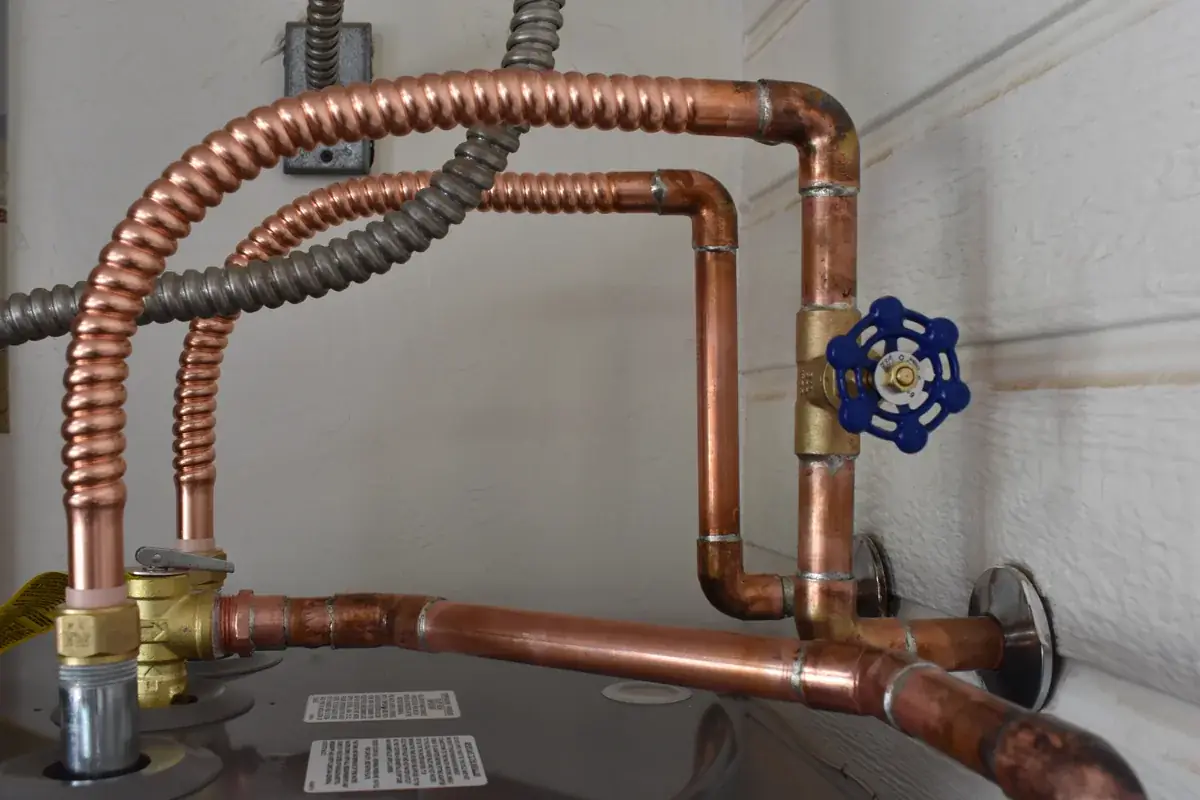
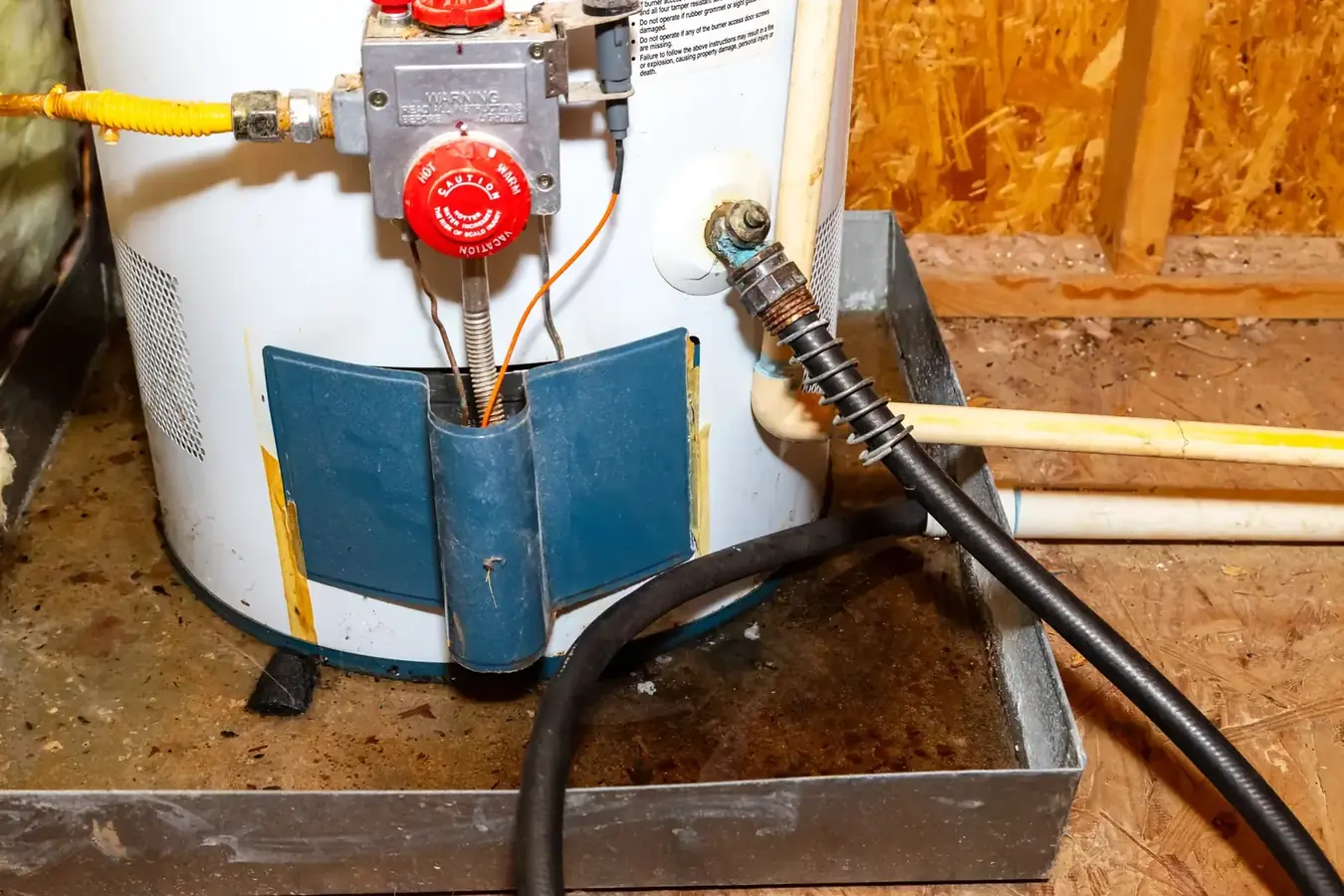
From a safe distance, notice whether water seems to begin near a connection at the top, around a valve, at a drain fitting or at the body of the heater. A photo can help. Don’t remove a cover or touch anything electrical that’s wet, and don’t assume water at the bottom means the tank has failed.
Water near the relief-valve discharge needs extra attention because that valve is a safety device. It can release water for more than one reason. Never plug, cap or change the discharge line to stop a drip. Tell the plumber what you see so they can find the cause.
What changed
A damp spot once is different from an active drip
Some moisture may be condensation. A puddle that keeps coming back or a visible drip needs checking. You can’t always tell which it is from one look. Note when you first saw the water, whether the area dries and becomes wet again, and whether the amount is increasing. That’s more helpful than guessing which part failed.
If the heater is also producing less hot water, making an unfamiliar sound or showing corrosion, include that with the leak report. They may be related, but together they still don’t prove what’s wrong. If the source isn’t obvious, leave the heater as it is for the plumber to inspect.
Repair decision
The source of the water changes the options
A leaky connection or a part that can be replaced is a different situation from a tank that’s failing. A plumber needs to identify the source, inspect the system and explain whether repair is suitable. A towel under the unit, or the drip stopping for a while, doesn’t mean the problem is fixed.
70 West’s water heater services include diagnosis, repair and replacement. Ask what they found, what the repair would fix and whether the heater’s condition changes the recommendation. If the water is actually from another part of the plumbing, the broader leak repair service may be the more relevant path.
Useful details
What to tell the plumber
Tell the plumber where the water collects, the highest point where you can see moisture, whether it is still dripping or spreading, and when the problem began. Mention any change in hot-water supply or unfamiliar sound. Add the heater type and brand if they are already known from an accessible label or paperwork.
You don’t need to drain the tank, test a relief valve or decide on repair versus replacement before you call. If water is spreading or you suspect a gas or electrical hazard, get immediate help instead of waiting for a routine maintenance visit.
Need a plumber?
Ask 70 West about your water heater
70 West Plumbing serves Hot Springs, Glenwood, Bismarck and Bonnerdale. Call 501-547-0518, 6AM to 6PM daily, and tell us what’s going on.