
70 West Plumbing · Homeowner guide
Outdoor Faucet Leaking? Start With Where the Water Appears
Separate a hose connection drip from a faucet or wall leak
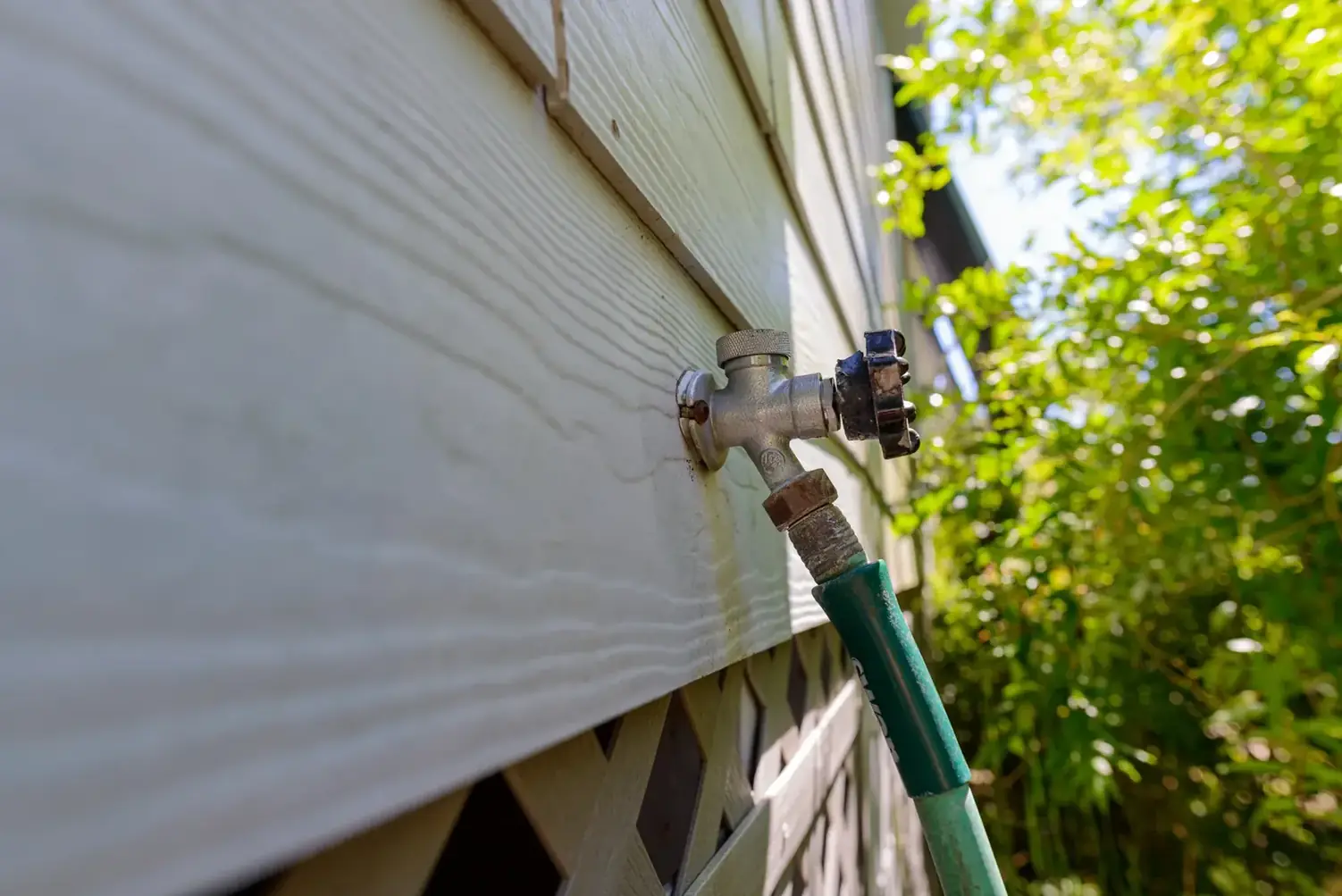
Water at an outdoor faucet can come from several places: the hose coupling, around the handle, the spout after shutoff, or a connection farther inside the wall. Start by noticing where the water shows up and whether the faucet is on or off. That tells you more than assuming every outdoor drip needs the same fix.
Leak location
Follow the visible water, without taking the faucet apart
A drip where the hose screws on is a different problem from water coming out around the handle. Water that keeps coming out of the spout after you shut it off raises another question: is the faucet closing all the way? Note whether the hose is attached and whether it leaks while running, right after, or all the time.
Look at the surrounding siding and, if accessible, the indoor area opposite the faucet. If it’s damp there, don’t wait on it. Stop using the faucet if water seems to be getting into the wall. Turning it on again and again to show the problem just adds more water. 70 West’s leak detection and pipe repair services include outdoor-faucet leaks.
Possible causes
Where it leaks helps point to the repair
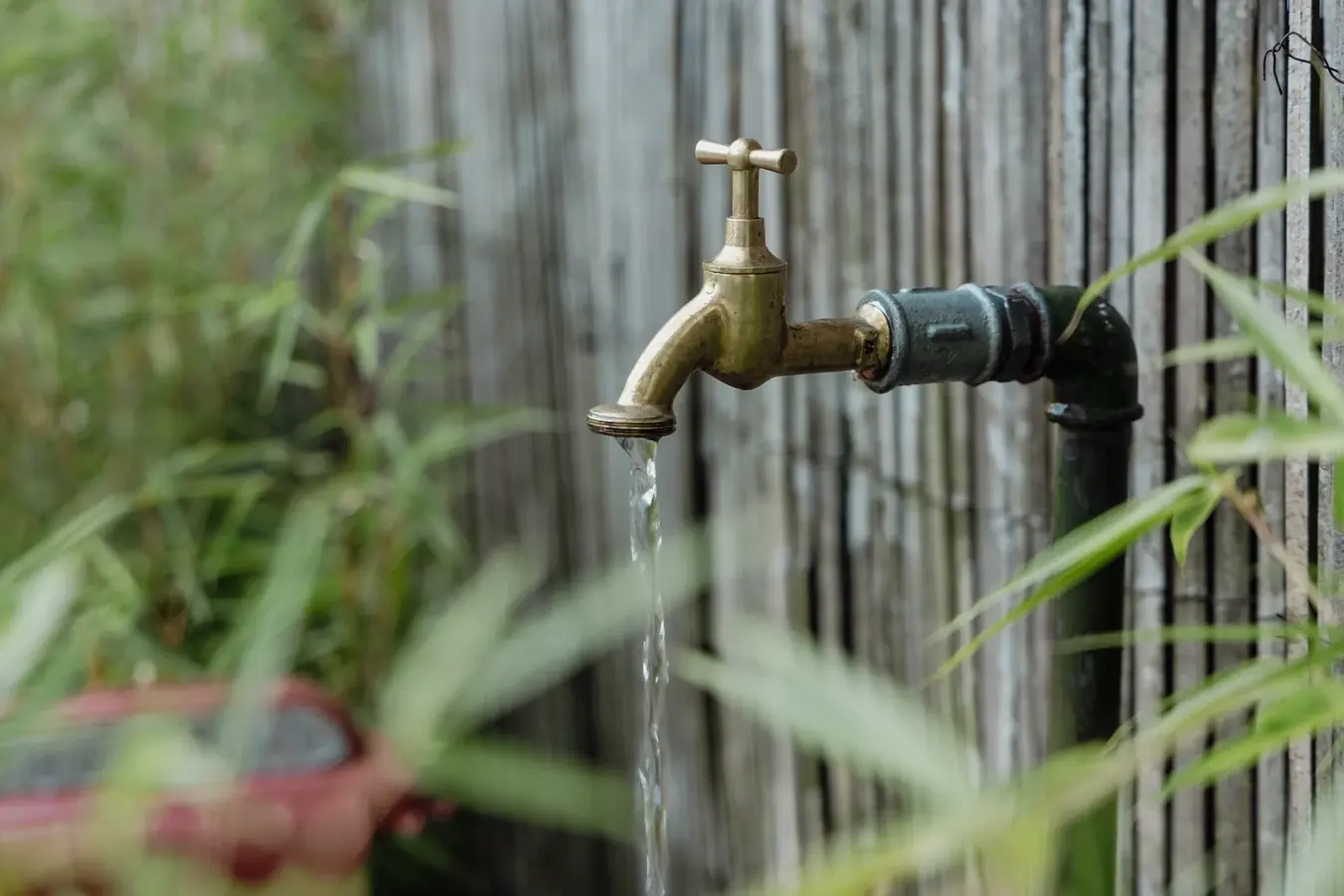
Outdoor faucets use seals and shutoff components that can wear or become damaged. For example, Woodford’s guidance for one wall-faucet model distinguishes leakage around the operating stem from a spout that will not stop dripping. Those two problems point to different parts inside that model.
A hose connection adds another joint outside the faucet itself. A plumber can tell whether the water starts at that connection, the faucet, or hidden piping. Share a brand name if you can see one, or a clear photo of the whole faucet, since parts and build vary between models. Avoid forcing a stiff handle or pulling on the faucet body to quiet a leak.
After cold weather
Why an inside-wall leak may show up later
A frost-resistant wall faucet depends on its design and how it was installed to handle freezing. Woodford explains that a hose left attached to some models can prevent water from draining. If trapped water freezes and splits the tube, the damage can be hidden behind the visible faucet.
On the design shown in that guidance, the split is past the indoor shutoff point, so water may only escape later, when the faucet is turned on. A faucet that looked quiet all winter can reveal a problem during the first outdoor use. That’s one reason to mention any dampness inside, even if the outdoor spout seems to work fine.
Repair or replace?
Ask what needs repair and what can stay
The real question is where the leak starts and which part of the faucet is involved. A replaceable seal and a damaged faucet body do not call for the same work. How easy it is to reach the inside connection matters too.
Ask whether a compatible repair part is available, whether the body and connection are sound, and how the repaired fixture should be used before cold weather. Follow the manufacturer’s instructions for your actual model; a label such as frost-resistant does not make every faucet immune to freezing under every condition.
Before you call
Give a clear description of the leak
- Say whether water appears at the hose, handle, spout, wall or indoor connection.
- Note whether the faucet is on or off when it leaks.
- Mention recent freezing weather, a stiff handle or a new hose connection.
- If water is getting inside or spreading indoors, say that first.
For active leakage, use a known shutoff only if you can reach and operate it safely. If you can’t stop the water, say so when you ask about emergency plumbing availability.
Need a plumber?
Get help with an outdoor faucet leak
Call 70 West Plumbing at 501-547-0518 during 6AM–6PM daily service hours. We serve Hot Springs, Glenwood, Bismarck and Bonnerdale.